
Borrowers – Peter Kay, John Kay and David M. Kay
The Borrowers Register at Innerpeffray is an invaluable insight into the interests of those coming to the library and how their desire for knowledge expanded over the years. Other information in the Register enables us to carry out research to discover more about their lives.
Born in 1834, borrower Peter Kay was a son of Peter Kay, farmer at Cuilt Balloch, Muthill, and his wife, Catherine McCrosty. Peter had five full siblings and at least two half siblings, who were born after his mother died and his father married Augusta McEwen, in May, 1848. When his father died in 1858, he took over the farm, along
with his sisters Jessie and Catherine, and brother James.
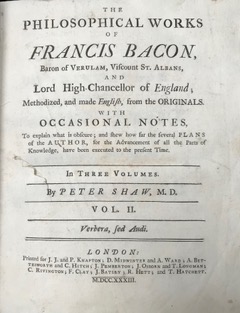
Peter began borrowing from the library in April 1856 and continued to do so until January 1863. On his first three borrowing visits he took home the plays of Shakespeare. This was followed that year by the Essays of Addison and Franklin, a Chambers History of the British Empire and a volume of the Works of Bacon.
On the 15th December he borrowed Tales of a Grandfather, by Sir Walter Scott, and was the first person to borrow a Scott novel from Innerpeffray. He went on to borrow three more – Heart of Midlothian, Old Mortality and Waverley.
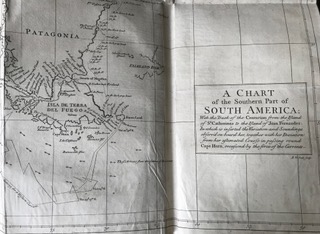
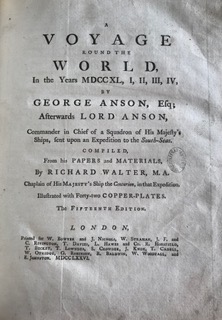
Other borrowing entries include Anson’s Voyage Round The World and Clark’s Sermons.
In April, 1863, he married Grace Miller, and soon after they moved to the parish of Wigton, Cumberland, where sons Peter and David M. were born. The family returned to Scotland in 1867 and Peter took on the tenancy of the Mill of Fortune farm, Comrie, where daughters Catherine and Grace were born. On the 1871 Census, Peter is recorded as ‘Farmer, Miller and Grain Dealer, Farm 150 acres 50 Arable’. Grace died in 1878. The 1881 Census shows Peter still there as ‘Farmer of 80 acres, 50 Arable’, and his sister Margaret, presumably to help look after him and the children.
In 1882, he gave up the tenancy to return to his farm at Cuilt Balloch. On 30th October, a Public Roup was held to sell all the Stock, Crop and Implements. Peter had been a stalwart member of the Upper Strathearn Ploughing Association and a keen Curler with the Monzievaird and Strowan Club. In the December, a ‘Complimentary Dinner’ was held at Comrie for him and it was reported in the local papers that Upper Strathearn Community was sorry to see him go but he would only be a short drive away. “He always endeavoured to look as cheerful as possible, to put-on the blythest
face, as it were – whatever might have gone wrong with him. Always willing to assist neighbours in every way.” He continued to live and farm at Cuilt Balloch until his death in 1903.
Rev. John Kay
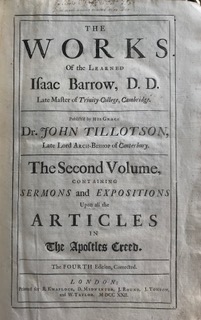
Peter’s brother, John, born in 1842, was a borrower at Innerpeffray from 1860 to 1865 and again in 1867. He is recorded in the register as a Student and at the time he was a ‘Student in Divinity’ at Glasgow University. His borrowing reflected his interest in religious topics – Leighton’s Sermons, Barrows Works, Moshelm’s ‘Ecclesiastical History’, Jeremy Taylor’s ‘A Discussion concerning Prayer’ – and in history, but he also read Shakespeare’s Plays and Scott’s novels Bride of Lammermuir and Ivanhoe.
Ordained as a Presbyterian Minister, he married Catherine Ogilvie, a Glasgow girl, in 1872 and shortly after the wedding they emigrated to the United States. Their daughter Edith was born in 1874 and second daughter, Mary, born in 1878. Following the birth of Mary they emigrated to Canada in 1878 and settled in Ontario, where their son,
John, was born in 1884. In 1888, at Brantford, Ontario, the Rev. John Kay is recorded as the Supreme Leader of The Supreme Council of the Order of the Canadian Home Circles. The couple remained in the same are of Ontario for the rest of their lives.
Catherine died suddenly in November, 1920, when they were visiting their daughter Edith in New York City. At that time their son, Rev. John Robertson Kay, was minister of the 6th Presbyterian Church, Albany, New York.
Rev. John Kay, aged 86, brother of the the late Mr. Peter Kay, farmer Balloch, and uncle of Professor D. M. Kay, died on 22 July, 1928, in Stratford, Ontario.
Rev. Professor David Miller Kay, D.D., D.S.O.
Peter’s younger son, David, attended Comrie Parish School from age seven until he was twelve and then became a pupil at Morrison’s Academy, Crieff, for four years. In 1883 he proceeded to St. Andrews University, where he distinguished himself as a student, gaining firsts in Latin and Greek; firsts in senior and advanced mathematics,
logic and metaphysics; first in English Lit., moral philosophy, chemistry and experimental physics; and an extra special prize for junior Hebrew. He won several scholarships and bursaries and graduated in 1890 with M.A., followed in the same year with his B.Sc..
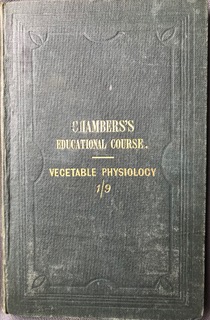
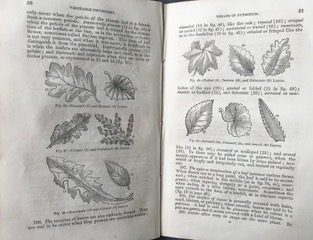
In 1885 and in 1888, whilst visiting his father at Balloch, David had borrowed from the library – Scott’s The Talisman and Chamber’s Vegetable Physiology. The latter a somewhat curious choice for such an educated young man.
In 1890 he entered Divinity Hall, Edinburgh, graduating a B.D. in 1893. During his divinity studies he was awarded the Pitt Club Theological Scholarship; first prize and medal in junior and senior Hebrew; first class certificates in Arabic and Syriac; first prize in a special examination for Biblical criticism. From 1895 to 1897 he was assistant to the Professor of Hebrew at Edinburgh University; later studied Semitic subjects at the Universities of Leipzig and Berlin. In 1897 he was Ordained into the Church of Scotland and appointed to the Jewish Mission in Constantinople. This was at a time when Turkey was trying to build a navy and many Scottish engineers were working there. He remained there until 1902 and it is where he laid the foundations of his great knowledge of the East, which would prove very useful to his country during the First World War.
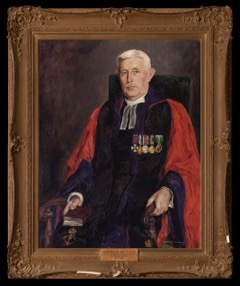
In 1902 he returned to St. Andrews and was appointed Regius Professor of Hebrew and Oriental Languages in St. Mary’s College. Throughout his life he took a keen interest in military training at the University and previous to the war he was a Commander of the Voluntary Aid Detachment of the Red Cross at St. Andrews.
When war broke out in 1914 he went out as chaplain to the British Headquarters in France at St. Omer. 1915 saw him transferred to Gallipoli. He saw further service in Egypt and Salonika 1916-1918, for which he was awarded the D.S.O.. After the Bulgarian defeat in September 1918, the Army of the Black Sea was constituted, and
Major Kay, as he now was, was with the Argyll and Sutherland Highlanders when they entered the ‘Holy City of Eastern Christianity’.
After the war Prof. Kay returned to St. Andrews where he continued his role at the University and published several books. Alongside his work he was involved in many community activities and enjoyed playing golf. He was also a keen curler and one of the leading players of St. Andrews Curling Club. Not only an expert on the ice he was a fine example of the ‘brotherhood’ associated with the game.
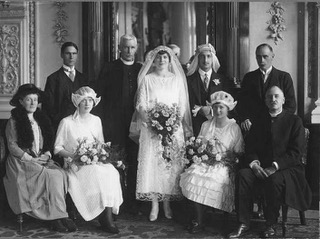
In 1921, the marriage took place at St. Giles Church, Edinburgh, of David Miller Kay, aged 55, Bachelor, University Professor of Hebrew and Oriental Languages, residing at Marine Hotel, St. Andrews, and Hilda Helen Halliday Gillies, aged 21. Daughter of James Gillies, D.D. Minister of the Church of Scotland and Helen Gillies (Halliday),
The Manse, Lesmahagow, Lanarkshire.
Whilst David was never a leading player at the R&A Golf Club of St. Andrews, he could claim to have once been the champion golfer of the Ottoman Empire, during his time in Constantinople. When the long serving Chaplain to the R&A, Rev. Patrick Playfair, died in October, 1924, Prof. Kay was invited to allow his name to be put before the Spring Meeting. He was approved as Chaplain and continued to serve on the Management Committee at the same time.
After a serious illness of several months David Miller Kay died on 5 December, 1930, aged 63, at his home, Kildonan, Links Crescent, St. Andrews. He was survived by his wife and two sisters, the Misses Kay, Greened House, Crieff.
GF
Acknowledgements:
Hannah Fleming, Learning & Access Curator, R&A World Golf Museum, St. Andrews.
Portrait of Prof. D.M. Kay – ‘Courtesy of the University of St Andrews Libraries and Museums, ID:
HC195’.
Wedding photo – Courtesy of Sally Archer