
With Europe’s only Senior Major golf tournament (for males), the ISPS HANDA Senior Open, returning in July, 2026, to The King’s Course at Gleneagles, it seemed appropriate for the Library to report on a few of its historical associations with the game of golf. We do not have any connection to the Gleneagles complex you see today, other than the occasional guest who comes on a visit to Innerpeffray. There is, however, a longstanding link to the 12th Century barony of Gleneagles. In the hands of the Haldane family, it grew in size over the centuries and Mary, a daughter of David Drummond, founder of the Library, married John Haldane of Gleneagles. The Haldane family still maintain a direct link with the Library. In the early 1900s the Caledonian Railway Company acquired 850 acres of land from the Gleneagles Estate, opening the King’s and Queen’s golf courses to the public in 1919, followed by the hotel in 1924.
Within the Library collections there are several books in which golf is mentioned. An appropriate place to begin this year, is with the attitude of James II. In 1457 he issued a statute on the practice of archery, adding “ …and as tuiching the futeball and golf to be punished be the Barronies un-law, and gif he takes not the un-law that it be taken be the King’s officiares…. And that al men that is within fifty or past twelve years sal use schutting.” Forty years on, James IV was even more adamant. “It is statute and ordained that in na place of the Realme there be use fute -ball and golfe or other unprofitable sports for the guide of the Realme and defense thereof.” Bows and shooting had to be practised in every parish or there would be fines “…of fourtene shillings to be raised be the Shireffe and Baillies, ..” At this point it should perhaps be noted that in 1552, St. Andrews formally dedicated its Links “..to golfe, futeball, shutting and all games.” In 1744, the Scots Magazine, records an important incident in the game’s history. “On the application of several persons of honour, skilled in the ancient and healthful exercise of goff the Edinburgh Council appointed the Treasurer, on 7th of March, to make a silver club of £15 value, to be played for on the links of Leith the first Monday of April, annually……… .”
The Act states that candidates had to book the week before and pay a fee of five shillings; recorded specific rules to be adhered to during play; that the “victor be stiled ‘Captain of the Goff’;” and lists the duties he will be required to undertake. “Accordingly, the first match was play’d on 2nd April by ten gentlemen and won by Mr. John Rattray, Surgeon in Edinburgh.”
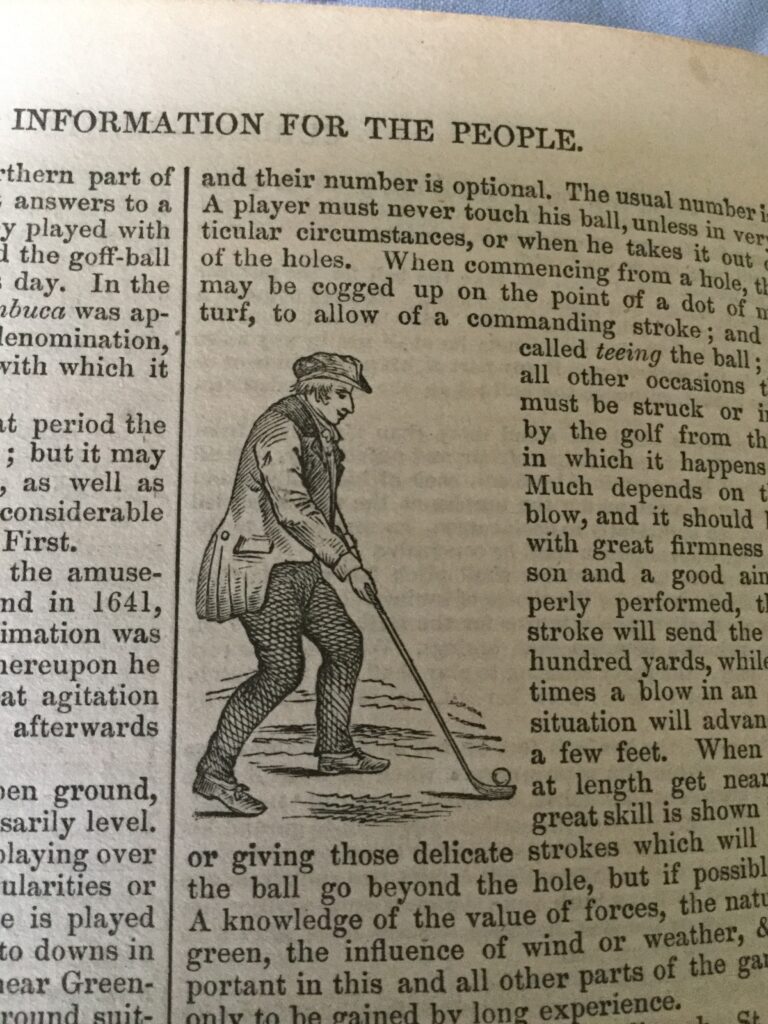
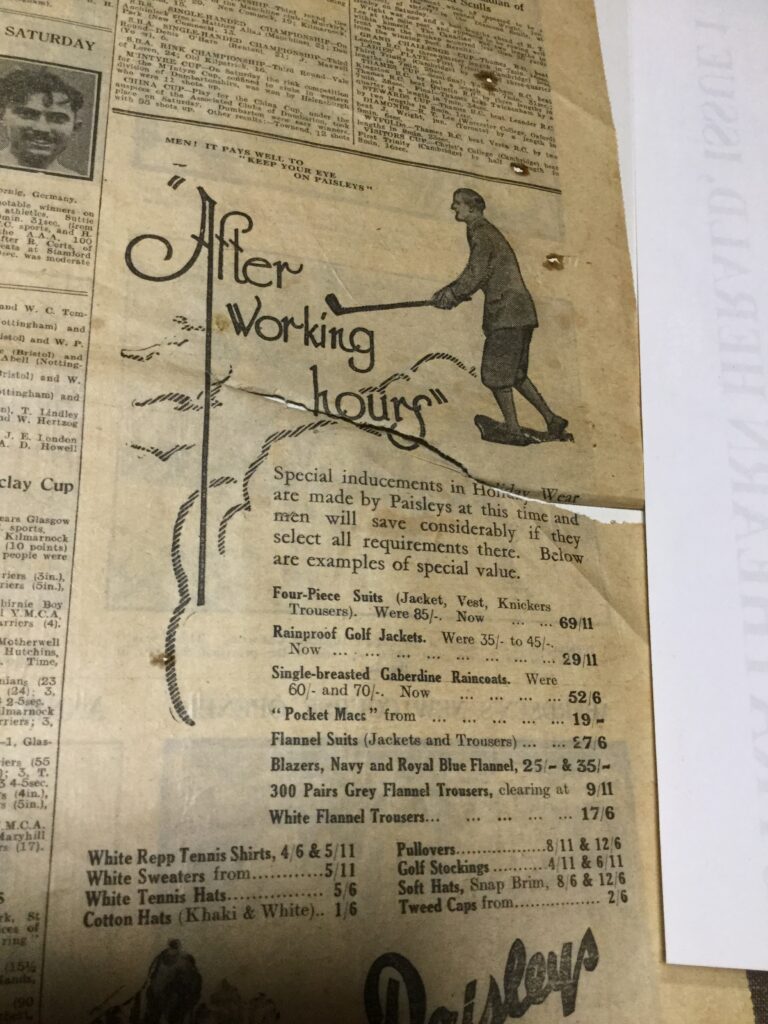
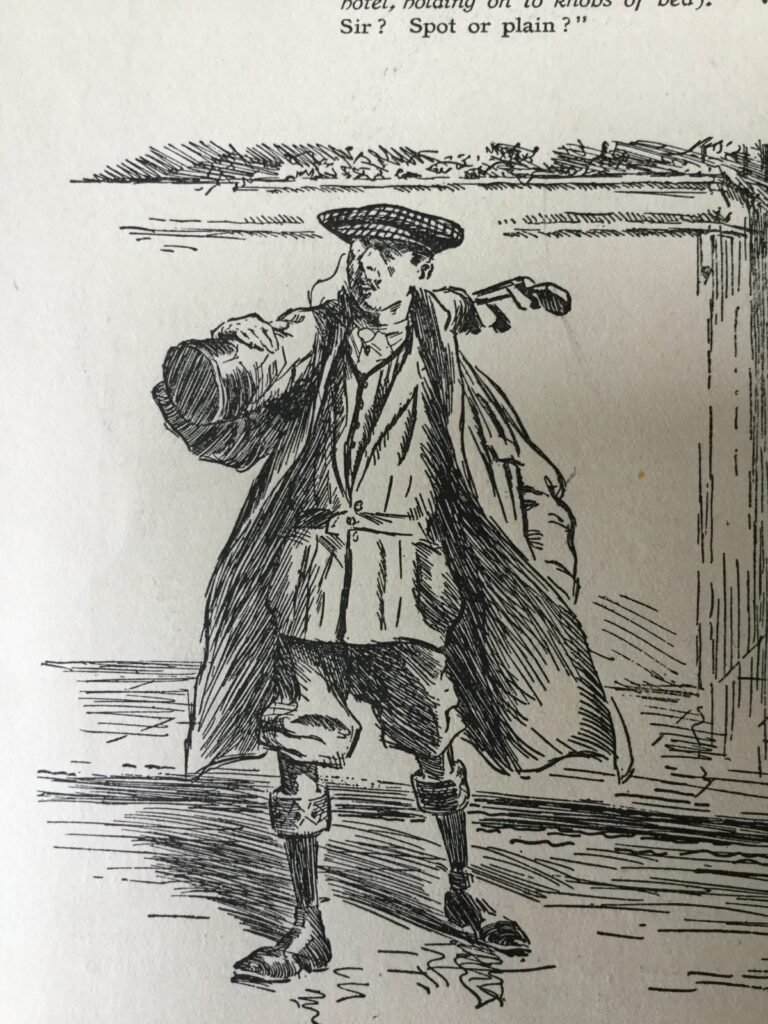
Images from: Chambers’ Information for the People 1842; Advertisement, The Tatler, 1933; Punch Drawings, 1921
The Borrowers Register, from 1747- 1968, provides a tangible insight into what people were reading and their interests. It also gives us a doorway to discover more about their lives. Several members of the Kay family, who farmed at Cuilt Balloch, Muthill, were borrowers at various times between 1856 and 1888. David Miller Kay borrowed only twice; once in 1885 and once in 1888, whilst visiting his father, Peter. As a student, David excelled in a wide range of subjects, studying in St. Andrews, Edinburgh and in Europe. In 1897 he was ordained and went to Turkey as a Church Missionary, returning to St. Andrews in 1902, on his appointment to Regius Professor of Hebrew and Oriental Languages. After serving in WW1 he continued in his role at the University. He was a keen golfer, and whilst never a leading player at St. Andrews, he could claim to have once been the champion golfer of the Ottoman Empire during his time in Constantinople. Serving on the Management Committee of the R&A for many years, in 1924 he was invited to become their Chaplain, a role he held until his death in 1930.
Our Visitors Books date from 1859 and are ongoing. Whilst many of those signing their name have been ‘famous’ in their field, if not immediately recognisable, the name Bing Crosby, writ in a bold hand, in 1926, certainly is. He was a very keen golfer and stayed at Gleneagles but did he really visit Innerpeffray? Or was it someone playing a prank? We will probably never know.
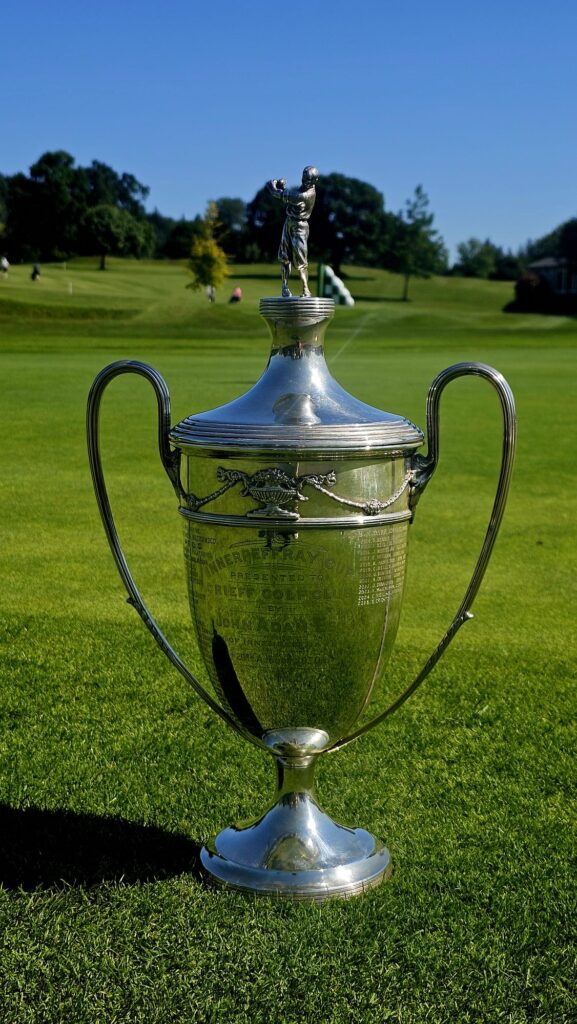
In 1917, Mr. John Adam purchased the Innerpeffray Estate. Innerpeffray School was a great source of interest to both him and his wife, but he was particularly supportive of the Library, The couple were both Borrowers and Mr. Adam was also a Library Governor, who did much to create local interest in and to safeguard its treasures. A pioneer of motoring and a founding member and first President of the Royal Scottish Automobile Club, he was also a keen curler and golfer. In 1930 he gifted the Innerpeffray Cup to Crieff Golf Club, to be played for annually in a Gents Open Amateur Competition. Entry fee was five shillings. For many years the winning golfer received a solid silver, miniature replica of the cup. The competition still takes place in August each year, over 36 holes, for golfers with a maximum handicap of 4.0 and who now pay an entry fee of £50.
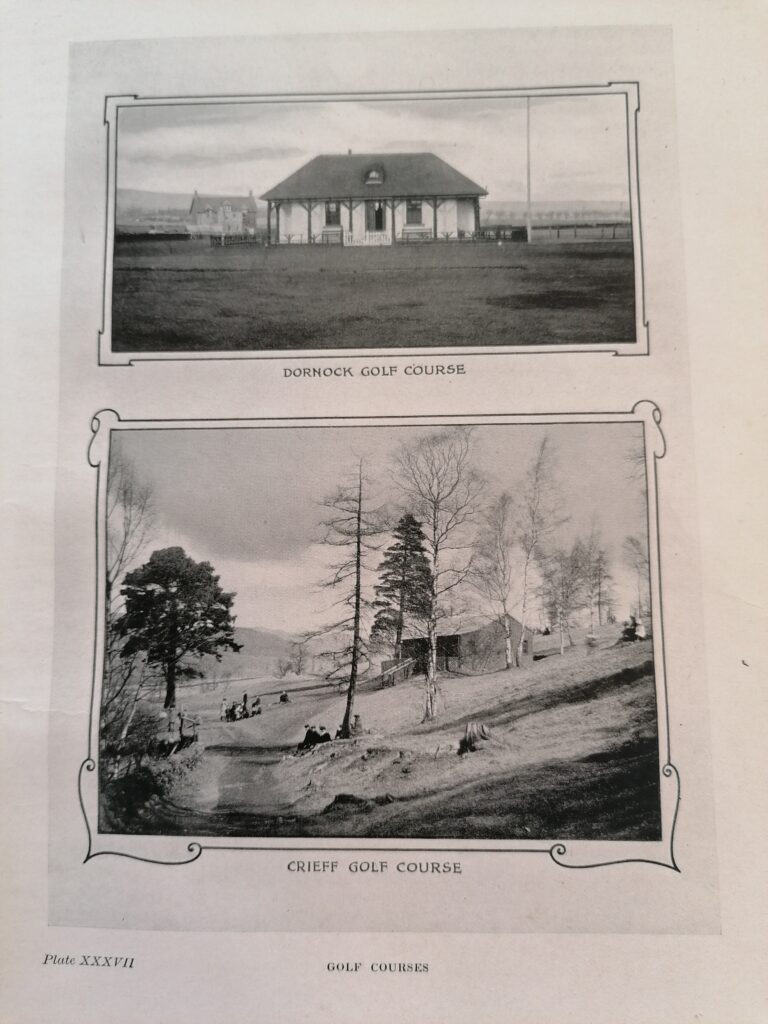
Another Crieff Golfing Connection
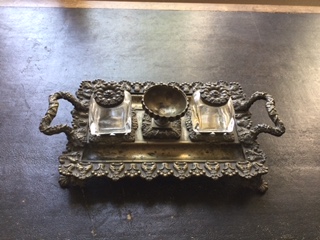
Visitors to the Library often ask about the antique inkwell stand on display (pictured below). This was gifted by George Philp, resident of Crieff, lover of Innerpeffray Library and another keen golfer. During WW1 Mr. Philp was a piper in the Royal Scots and served with the 16th Battalion in France. Originally in the garage business he brought his family to live in Crieff in 1946 and took over the Birches Hotel. He retired in 1953, when his son, James, carried on the family business. Always a golfing fanatic, in 1980 George was the oldest captain of Crieff Golf Club presenting prizes, including the cup he had gifted to the club. In his latter years he was appointed a Life Member and was playing the Ferntower course at the age of 90. He died in 1983 aged 93.
Images courtesy of Library of Innerpeffray and Crieff Golf Club
GF